Four Days' Notice
This week I went to the Utah ATD Conference. It was my 15th one, give or take a few COVID years.
My first was in 2011, and I didn't ease into it. I was the conference chair that year. I count it as my start in networking and in this industry, and I can trace almost every job and every contract I've had since back to people I met starting that year.
Something bigger happened that week, though.
The Call
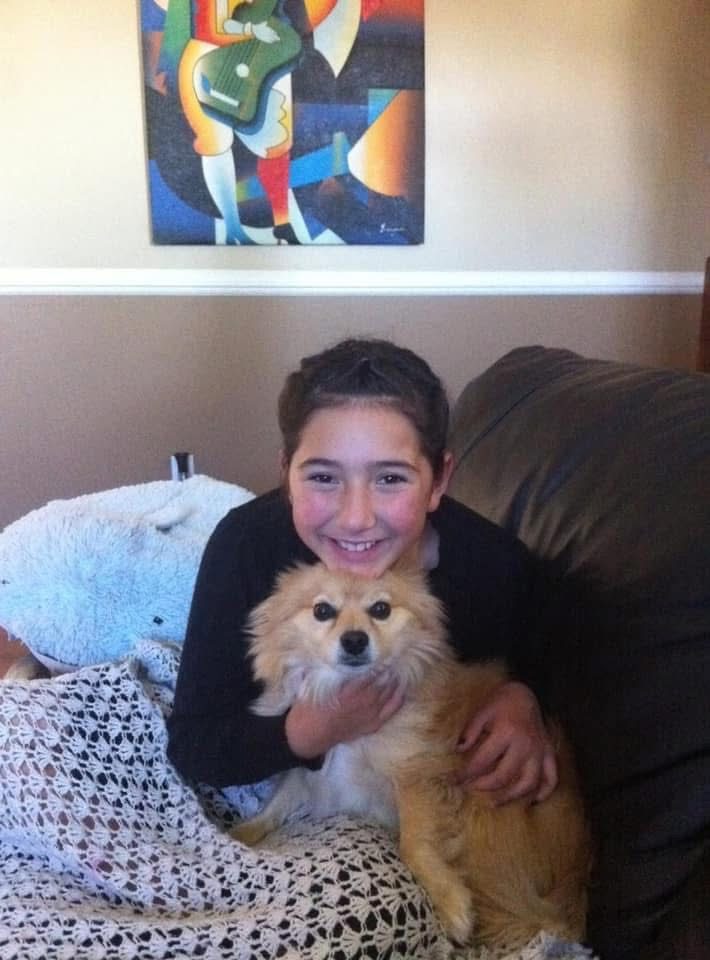
The Thursday before the conference, we got a call from the state. A family member was going to be moved into foster care if we couldn't step in.
Of course we stepped in. I was out of town until Sunday, so Sunday was the day we picked her up. She was 10. The conference I was chairing was four days away.
I didn't expect to become a parent that week. I expected to run a conference.
Fifteen years later, I have an amazing, beautiful daughter who just got engaged. She's living her best life, and I'm so proud of her.
What Everyone Was Talking About This Year
AI, of course. There was a lot of conversation about how it's changing our work and how it's changing us as humans.
I use AI every day. One morning this week it did my grocery shopping for me. So this topic always fascinates me.
Then Scott Provence said something I haven't been able to shake. He talked about going through the stages of grief as AI moves further into our lives. We grieve the things we used to do. We grieve the ways we thought we'd keep doing them.
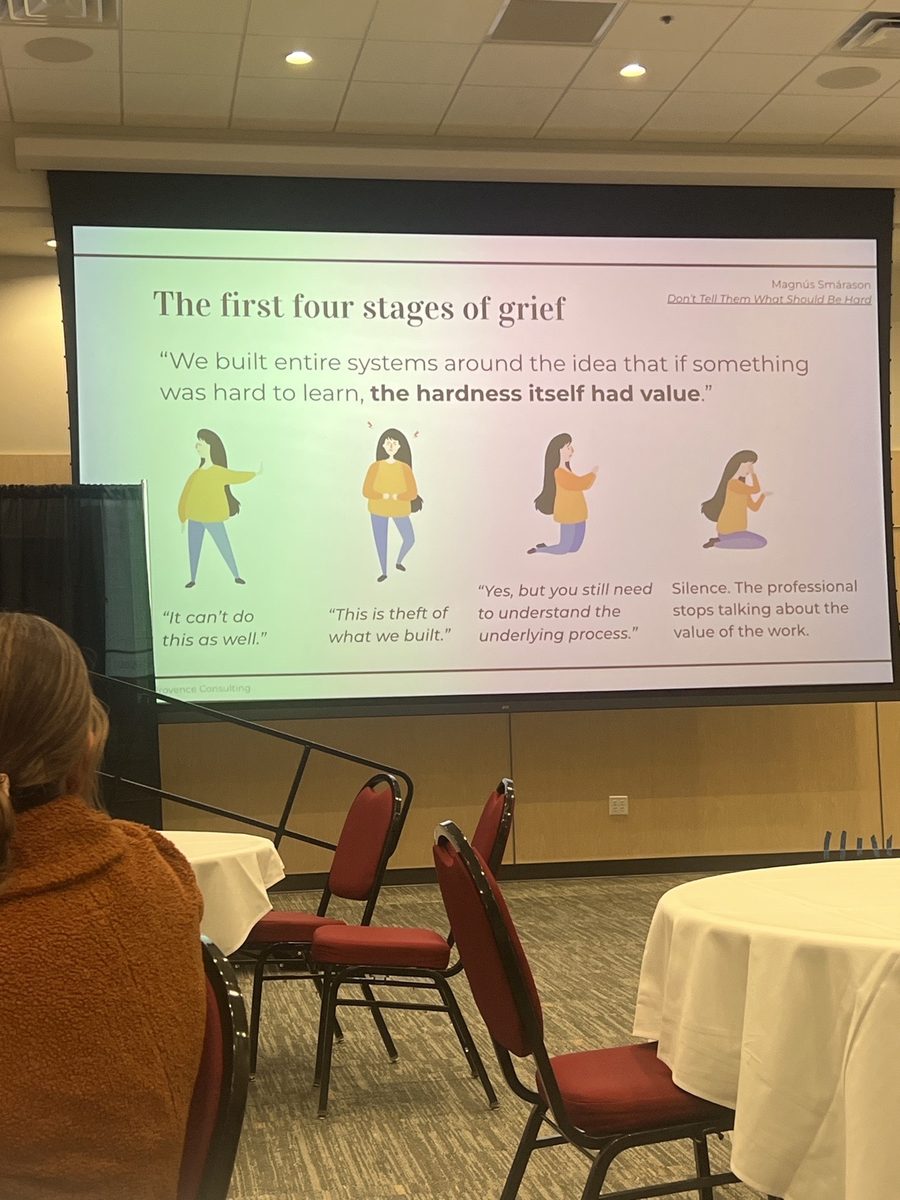
His slide walked through what the first four stages sound like at work. Denial sounds like "It can't do this as well." Anger says our work was taken from us. Bargaining says people will still need to understand the process underneath. And the fourth stage is silence, when a professional stops talking about the value of the work at all.
I can for sure identify with the third one. I feel like that's where we are with AI today. It's not perfect, and it still needs a ton of coaching.
But I don't think we'll stay here. I think it will pass us. So I'm looking at what that might look like, and how I get my own mindset ready for it.
I think Scott's right. Grief is part of change, even when the change is for the better.
Good Change Is Still Hard
I learned that in 2011. Our daughter is one of the best things that has ever happened to me, and adapting to the world of a 10-year-old overnight was still hard. We had a picture of how life was going to go, and in one phone call it changed. She was adapting to a whole new world too, and she had a lot more to grieve than we did.
I remember walking into the local elementary school that Monday morning, new backpack and all, and explaining that she needed to start school. That's not how it works. You can't just walk into a school and tell them you have a kid who needs to attend. There's a registration process, and paperwork, and all sorts of things we had to work through with the state and the district. Who would have thought?
She spent that week at my parents' house instead.
Oh, the things we learn. We didn't get it right the first time, and that would repeat over the years. We got it wrong a lot. But we always tried to learn and grow from it.
It was hard, and it changed my life for the better. I've stopped thinking those two things cancel each other out.
That's a lot like how AI feels right now. It came into our lives overnight. Nobody got much notice, and it feels like everyone is just doing the best they can.
What People Need From Us
If you lead a team, or you design learning for one, here's what I'm taking home from this week.
Say out loud what's being lost. People are good at parts of their job that AI now does in seconds. They're allowed to miss that, even when the new way might be better. When a leader names it, people stop feeling like they have to hide it.
Give it time and space. One training session won't make a new reality feel normal. Plan for practice, and plan for a few rough weeks.
Expect uneven days. Someone can love a new tool on Tuesday and want to throw it out the window on Thursday. That's what adapting looks like.
Start with your managers. They're adapting too, and their teams are watching how they handle it. Give them the room first so they can give it to everyone else.
The Best You Can Is Good Enough
I didn't have it figured out in 2011. We did the best we could, one day at a time. I look at my daughter now and I know it was enough.
I don't have the next era of AI figured out either. I can't plan for it any better than I planned for that phone call. What I can do is get my mindset ready and trust that I'll adapt again.
So if AI landed in your work the way a 10-year-old landed in my life, with very little warning, give yourself and your people some room. Let them miss what they miss, and keep learning together.
The best you can is good enough.
Want Help Giving Your Team That Room?
If your people are adapting to AI and you want training that makes space for the human side of it, we'd love to talk.
People First. Growth Always.